How to Plan a Successful Event from Start to Finish
Whether you're organizing a corporate event, a community gathering, or a charity fundraiser, planning an event involves careful thought, detailed organization, and a step-by-step approach to ensure everything runs smoothly. From setting clear goals to managing logistics, every detail matters. In this blog, we’ll walk you through how to plan an event successfully, covering everything from the initial idea to the final wrap-up.
1. How to Plan an Event: Setting the Foundation
Successful event planning begins with clear objectives. Before jumping into the details, ask yourself the following questions:
- What is the purpose of the event?
- Who is your target audience?
- What are the key outcomes or goals you want to achieve?
Once you’ve established your event’s purpose, it’s time to begin breaking down the core elements. Event planning steps can be overwhelming, but organizing them into categories helps make the process manageable. Here’s how:
Define Your Event Type
Is it a corporate gathering, community event, or fundraising activity? Your event type will dictate the venue, catering, guest list, and other requirements.
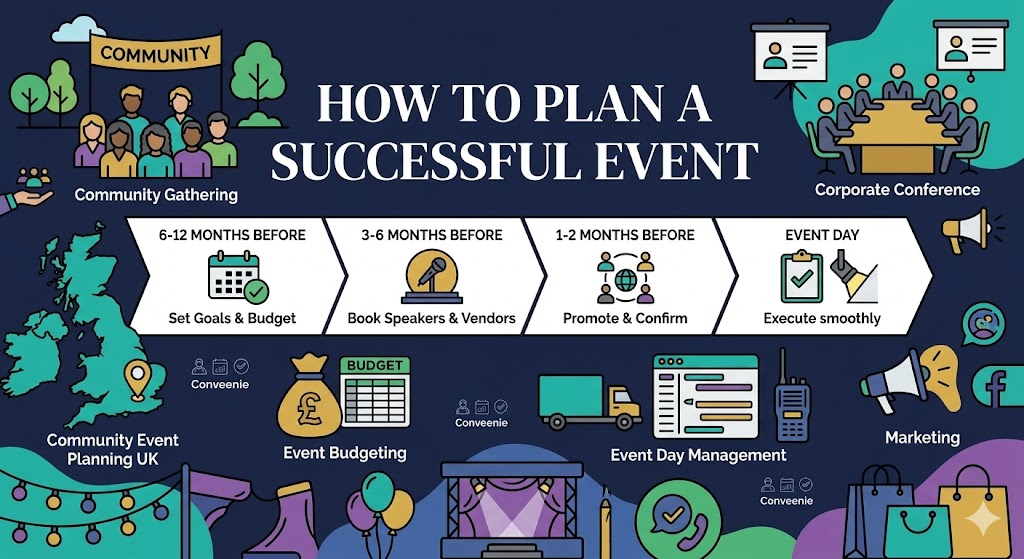
Create an Event Planning Timeline
Make a detailed event planning timeline. This includes:
- 6-12 months before: Secure a venue, outline your event goals, and begin promoting.
- 3-6 months before: Finalize logistics, secure speakers/performers, and start marketing efforts.
- 1-2 months before: Confirm all vendors, confirm guest list, and run risk assessments.
- 1-2 weeks before: Double-check everything, finalize last-minute details, and run any rehearsals.
This timeline will keep things on track and ensure you don't overlook anything.
2. Event Planning Checklist: Stay Organised
Here is an event planning checklist to help you get started. Keep this handy throughout the process to track your progress:
- Budgeting: Allocate funds for all aspects of the event, including venue, food, staff, transportation, and any contingency costs.
- Venue Selection: Choose a venue that fits the size and style of the event. Consider accessibility, amenities, and location.
- Speakers & Entertainment: If your event includes guest speakers or entertainment, book them early and ensure they align with your theme or goals.
- Vendors & Suppliers: Secure reliable vendors for food, decor, technology, and other supplies.
- Staffing: Organise event staff and volunteers, and clearly define their roles.
- Event Materials: Prepare any event materials, such as brochures, agendas, or promotional gifts.
- Marketing & Promotion: Use your website, social media, and email to promote your event. Build excitement through a countdown, sneak peeks, or special offers.
- Guest Registration: Set up a system for event registrations and ensure you have enough space for your expected number of attendees.
3. Corporate Event Planning Guide
Corporate events require specific attention to detail, especially when it comes to aligning with business goals. For a successful corporate event, here’s what you need to focus on:
Align with Company Goals
Make sure the event aligns with the company’s goals. Is it for networking? Employee recognition? Training? A clear connection to business objectives ensures the event feels relevant and productive.
Choose the Right Venue
Corporate events often need larger spaces that provide a professional atmosphere while also fostering networking. Look for venues that offer appropriate AV equipment, meeting rooms, and networking areas.
Create a Budget Plan
For corporate events, budgeting is a key factor. Be sure to include all costs, from venue hire to post-event follow-up materials. Keep an eye on unexpected costs, such as last-minute equipment rentals or additional food and beverage.
Event Risk Assessment Checklist
A risk assessment is vital to ensure that any potential hazards or issues are identified before the event. This includes:
- Health and safety: Ensure safe access and exits, check for fire safety equipment, and any specific regulations related to your event.
- Insurance: Get the proper insurance coverage for the event to protect against accidents or property damage.
- Contingency plans: Have a backup plan for weather, tech failures, or staffing issues.
4. Community Event Planning UK: Key Considerations
If you're hosting a community event in the UK, you’ll need to think about a few specific elements to ensure success.
Engage the Community
Focus on connecting with your target audience. Get feedback on the types of events they’re interested in and tailor your event around these preferences.
Collaborate with Local Partners
Community events benefit from strong local partnerships. Work with local businesses, charities, and service providers to bring in sponsorship, volunteers, and resources that can help lower costs and raise awareness.
Promote Your Event Effectively
In the UK, consider promoting your community event via local news outlets, social media, and word-of-mouth. Platforms like Facebook, Eventbrite, and Meetup are great for promoting local events and encouraging community engagement.
5. Budgeting for Events in the UK: Best Practices
When it comes to budgeting for events in the UK, there are several best practices to follow to ensure you stay within your financial limits:
Set Clear Budget Categories
Break down your budget into categories like venue, catering, entertainment, staff, marketing, and decorations. This way, you can easily see where your money is going and adjust accordingly.
Track Your Spending Regularly
Use tools like Excel, Google Sheets, or event-specific software (such as Conveenie's venue booking platform) to track your spending and ensure you remain on target.
Look for Discounts and Deals
When possible, negotiate with suppliers and seek discounts. Many vendors offer lower prices during off-peak times or when you book early, so take advantage of those opportunities.
Leave Room for Unexpected Costs
No event is without surprises. It’s important to allocate an additional 10-15% of the total budget for unplanned expenses that may arise. This buffer will help you stay on track without scrambling for extra funds last-minute.
6. Event Logistics Management: Ensuring Everything Runs Smoothly
Effective event logistics management is the backbone of a successful event. Here’s how to manage it efficiently:
Create a Detailed Event Day Schedule
Develop a timeline for the event day that includes everything from vendor arrivals to guest check-ins and scheduled activities. This will keep things organized and on track.
Coordinate with All Vendors and Suppliers
Make sure all vendors know the schedule and expectations. Confirm deliveries, equipment setup, and any technical requirements ahead of time.
Communication is Key
Ensure your team and all involved parties are in constant communication during the event. Tools like Slack or WhatsApp are great for staying in touch on event day, ensuring everyone is aligned and responsive to changes.
Conclusion: Bringing Your Event to Life
Planning a successful event involves careful preparation, budgeting, and attention to detail. By following this step-by-step approach, you can ensure that your event stays on track, delivers excellent value, and meets its intended objectives. Whether you are hosting a corporate event or a community gathering, event logistics management and smart budgeting are crucial to ensuring your event is a success.
If you need assistance finding the perfect venue for your event, Conveenie is here to help. We offer a wide range of venues, from corporate meeting spaces to event spaces for large community gatherings.
Start planning your next successful event with Conveenie today.