
blog-img
Dated:Mar 26, 2026

How to Plan a Successful Event from Start to Finish

Whether you're organizing a corporate event, a community gathering, or a charity fundraiser, planning an event involves careful thought, detailed organization, and a step-by-step approach to ensure everything runs smoothly. From setting clear goals to managing logistics, every detail matters. In this blog, we’ll walk you through how to plan an event successfully, covering everything from the initial idea to the final wrap-up.

1. How to Plan an Event: Setting the Foundation

Successful event planning begins with clear objectives. Before jumping into the details, ask yourself the following questions:

  • What is the purpose of the event?
  • Who is your target audience?
  • What are the key outcomes or goals you want to achieve?

Once you’ve established your event’s purpose, it’s time to begin breaking down the core elements. Event planning steps can be overwhelming, but organizing them into categories helps make the process manageable. Here’s how:


Define Your Event Type

Is it a corporate gathering, community event, or fundraising activity? Your event type will dictate the venue, catering, guest list, and other requirements.


Create an Event Planning Timeline

Make a detailed event planning timeline. This includes:

  • 6-12 months before: Secure a venue, outline your event goals, and begin promoting.
  • 3-6 months before: Finalize logistics, secure speakers/performers, and start marketing efforts.
  • 1-2 months before: Confirm all vendors, confirm guest list, and run risk assessments.
  • 1-2 weeks before: Double-check everything, finalize last-minute details, and run any rehearsals.

This timeline will keep things on track and ensure you don't overlook anything.


2. Event Planning Checklist: Stay Organised

Here is an event planning checklist to help you get started. Keep this handy throughout the process to track your progress:

  • Budgeting: Allocate funds for all aspects of the event, including venue, food, staff, transportation, and any contingency costs.
  • Venue Selection: Choose a venue that fits the size and style of the event. Consider accessibility, amenities, and location.
  • Speakers & Entertainment: If your event includes guest speakers or entertainment, book them early and ensure they align with your theme or goals.
  • Vendors & Suppliers: Secure reliable vendors for food, decor, technology, and other supplies.
  • Staffing: Organise event staff and volunteers, and clearly define their roles.
  • Event Materials: Prepare any event materials, such as brochures, agendas, or promotional gifts.
  • Marketing & Promotion: Use your website, social media, and email to promote your event. Build excitement through a countdown, sneak peeks, or special offers.
  • Guest Registration: Set up a system for event registrations and ensure you have enough space for your expected number of attendees.


3. Corporate Event Planning Guide

Corporate events require specific attention to detail, especially when it comes to aligning with business goals. For a successful corporate event, here’s what you need to focus on:


Align with Company Goals

Make sure the event aligns with the company’s goals. Is it for networking? Employee recognition? Training? A clear connection to business objectives ensures the event feels relevant and productive.


Choose the Right Venue

Corporate events often need larger spaces that provide a professional atmosphere while also fostering networking. Look for venues that offer appropriate AV equipment, meeting rooms, and networking areas.


Create a Budget Plan

For corporate events, budgeting is a key factor. Be sure to include all costs, from venue hire to post-event follow-up materials. Keep an eye on unexpected costs, such as last-minute equipment rentals or additional food and beverage.


Event Risk Assessment Checklist

A risk assessment is vital to ensure that any potential hazards or issues are identified before the event. This includes:

  • Health and safety: Ensure safe access and exits, check for fire safety equipment, and any specific regulations related to your event.
  • Insurance: Get the proper insurance coverage for the event to protect against accidents or property damage.
  • Contingency plans: Have a backup plan for weather, tech failures, or staffing issues.


4. Community Event Planning UK: Key Considerations

If you're hosting a community event in the UK, you’ll need to think about a few specific elements to ensure success.


Engage the Community

Focus on connecting with your target audience. Get feedback on the types of events they’re interested in and tailor your event around these preferences.


Collaborate with Local Partners

Community events benefit from strong local partnerships. Work with local businesses, charities, and service providers to bring in sponsorship, volunteers, and resources that can help lower costs and raise awareness.


Promote Your Event Effectively

In the UK, consider promoting your community event via local news outlets, social media, and word-of-mouth. Platforms like Facebook, Eventbrite, and Meetup are great for promoting local events and encouraging community engagement.

5. Budgeting for Events in the UK: Best Practices

When it comes to budgeting for events in the UK, there are several best practices to follow to ensure you stay within your financial limits:


Set Clear Budget Categories

Break down your budget into categories like venue, catering, entertainment, staff, marketing, and decorations. This way, you can easily see where your money is going and adjust accordingly.


Track Your Spending Regularly

Use tools like Excel, Google Sheets, or event-specific software (such as Conveenie's venue booking platform) to track your spending and ensure you remain on target.


Look for Discounts and Deals

When possible, negotiate with suppliers and seek discounts. Many vendors offer lower prices during off-peak times or when you book early, so take advantage of those opportunities.


Leave Room for Unexpected Costs

No event is without surprises. It’s important to allocate an additional 10-15% of the total budget for unplanned expenses that may arise. This buffer will help you stay on track without scrambling for extra funds last-minute.


6. Event Logistics Management: Ensuring Everything Runs Smoothly

Effective event logistics management is the backbone of a successful event. Here’s how to manage it efficiently:


Create a Detailed Event Day Schedule

Develop a timeline for the event day that includes everything from vendor arrivals to guest check-ins and scheduled activities. This will keep things organized and on track.


Coordinate with All Vendors and Suppliers

Make sure all vendors know the schedule and expectations. Confirm deliveries, equipment setup, and any technical requirements ahead of time.


Communication is Key

Ensure your team and all involved parties are in constant communication during the event. Tools like Slack or WhatsApp are great for staying in touch on event day, ensuring everyone is aligned and responsive to changes.


Conclusion: Bringing Your Event to Life

Planning a successful event involves careful preparation, budgeting, and attention to detail. By following this step-by-step approach, you can ensure that your event stays on track, delivers excellent value, and meets its intended objectives. Whether you are hosting a corporate event or a community gathering, event logistics management and smart budgeting are crucial to ensuring your event is a success.

If you need assistance finding the perfect venue for your event, Conveenie is here to help. We offer a wide range of venues, from corporate meeting spaces to event spaces for large community gatherings.

Start planning your next successful event with Conveenie today.

Related Articles

  • blog-img

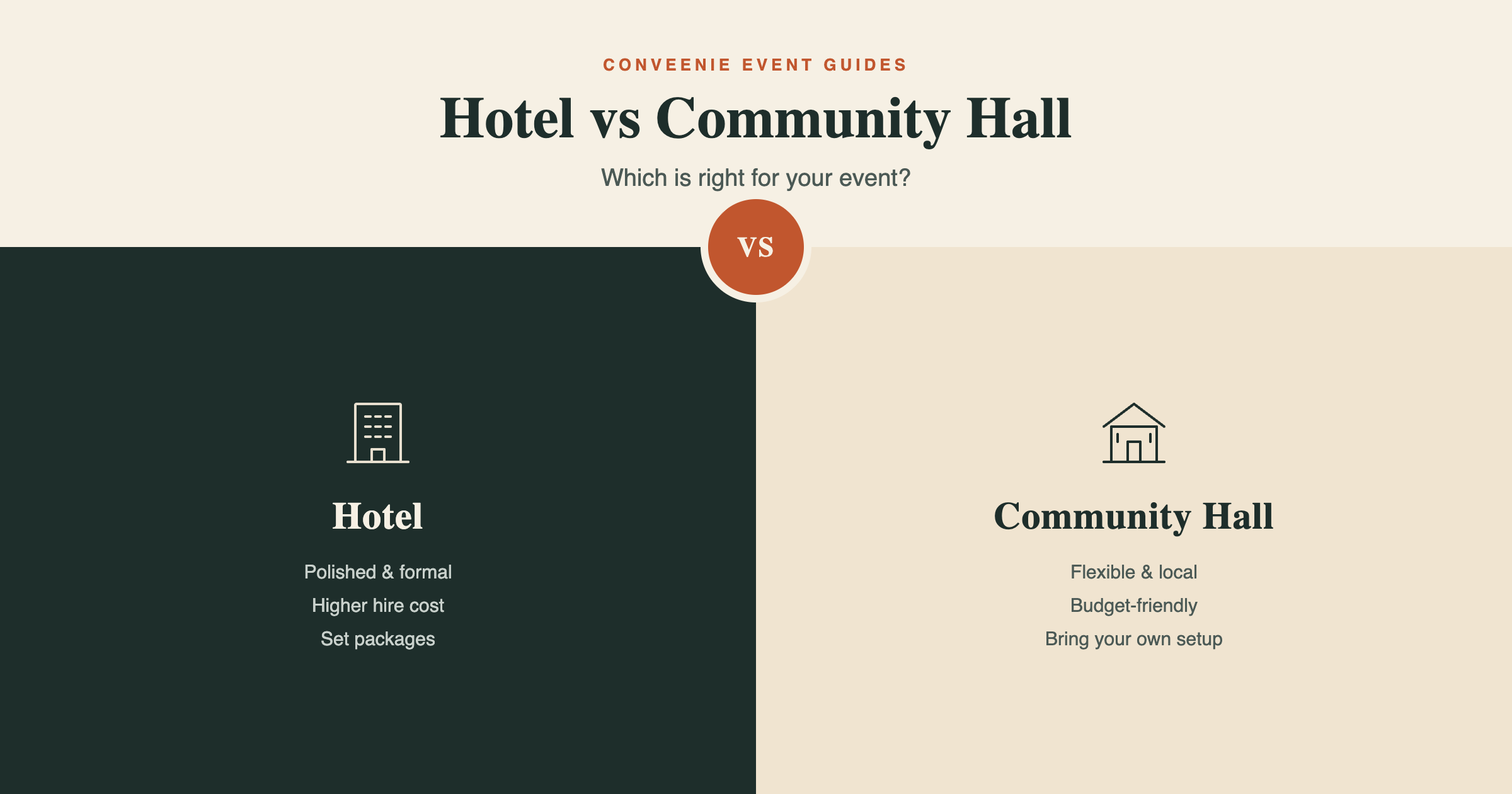
    Hotel vs Community Hall: Which Is Right for Your Event?

    Choosing a venue is one of the most important decisions when planning an event. Whether you are organising a birthday party, business meeting, wedding celebration, charity event or community gathering, the venue can affect your budget, the atmosphere and how easily the event comes together.

    Two common options in London are hotels and community halls. Both can provide useful spaces for events, but they offer very different experiences. Understanding the difference between a hotel venue vs community hall can help you decide which option is more suitable for your event.

    For some organisers, a hotel may offer convenience and a more formal setting. For others, a community hall may provide more flexibility and better value for money. The right choice depends on your event, guest numbers, budget and the facilities you need.

    With Conveenie, you can explore different types of event spaces across London and compare venues based on your requirements.

    Hotel Venue vs Community Hall: What Is the Difference?

    Hotels are often designed to provide a complete event experience. Many have dedicated function rooms, catering services, staff and other facilities available in one location. This can make them convenient for organisers who want most of the event arrangements handled by the venue.

    A community hall is usually a more flexible type of space. It may provide a large room, tables, chairs, kitchen facilities and other basic amenities, while allowing organisers to arrange their own catering, decorations and entertainment depending on the venue's rules.

    This difference is important when choosing between hotel and hall hire. If convenience is your main priority, a hotel may be worth considering. If flexibility and control over your event are more important, a community hall could be a useful alternative.

    Should I Hire a Hotel or a Community Hall for My Event?

    The answer depends on what you need from your venue.

    A hotel can be useful for formal events where you want catering, accommodation and event facilities in the same location. For example, a business conference with guests travelling from outside London may benefit from having hotel rooms available nearby.

    A community hall can be more suitable for events where you want greater control over the way the space is used. A birthday party, local celebration, children's event, workshop or charity fundraiser may not require the additional services provided by a hotel.

    Before deciding should I hire a hotel or a community hall for my event, think about the type of experience you want to create and how much involvement you want to have in organising the event.

    Comparing the Cost of Hotel and Community Hall Hire

    Budget is often one of the biggest differences between the two options.

    The cost comparison between hotel and community hall venue hire can vary depending on the location, size of the venue, date and facilities included. Hotel event spaces may have packages that include food, drinks, staff and equipment, while community halls may charge primarily for the use of the room.

    However, it is important to compare the total cost rather than simply looking at the initial hire price.

    A community hall may allow you to bring your own caterer, decorations or entertainment, depending on its rules. This can give you more control over how your budget is spent.

    On the other hand, a hotel package may include several services that you would otherwise have to organise separately.

    This is why the cheapest hourly hire price is not necessarily the cheapest overall option. Look at what is included and what you will need to pay for separately before making your decision.

    If you are working with a fixed budget, Conveenie's guide on How to Set and Stick to an Event Budget can also help you plan your venue costs.

    Why Choose a Community Hall Instead of a Hotel?

    There are several reasons why organisers may choose a community hall instead of a hotel.

    One of the main advantages is flexibility. Depending on the venue, you may be able to choose your own caterer, bring your own decorations and arrange the room according to your event.

    Community halls can also work well for events that need a larger open space. A hall can be arranged for dining, dancing, children's activities, workshops, performances or community gatherings.

    Another benefit is location. Community venues are often found within local neighbourhoods, making them convenient for residents and community groups.

    For organisers searching for an affordable alternative to hotel venue hire, a community hall can therefore be worth considering.

    When a Community Hall Works Better Than a Hotel Ballroom

    A community hall may work particularly well when you need a flexible space rather than a formal event package.

    For example, a children's birthday party may need room for games and activities rather than a formal dining setup. A charity fundraiser may need space for stalls, tables and displays. A community meeting may only require chairs and a presentation area.

    In these situations, when a community hall works better than a hotel ballroom often comes down to the type of event rather than the size of the budget.

    Community halls can also be useful for events where the organisers want to create their own atmosphere. Instead of working with a fixed hotel package, you may have more freedom to decide how the room looks and how the event operates.

    What About Catering and Other Facilities?

    Catering is another important difference between hotels and community halls.

    Hotels often have their own catering teams and may offer set menus or event packages. This can make planning easier if you want the venue to handle most of the food and drinks.

    Community halls may have kitchens or refreshment areas, but catering arrangements can vary. Some venues allow outside caterers or homemade food, while others may have restrictions.

    Before booking a community hall, check whether tables and chairs are provided and whether you have access to kitchen facilities. You should also ask about cleaning, equipment, sound systems and any other facilities that your event requires.

    Taking the time to check these details can make the final decision much easier.

    Choosing an Affordable Alternative to Hotel Event Spaces in London

    London has many different types of venues, so you do not necessarily have to choose between a hotel and a large commercial event space.

    If you are looking for affordable alternatives to hotel event spaces in London, community halls, local function rooms and flexible event spaces can provide different options.

    The right choice will depend on the type of event you are planning. A smaller meeting may only need a simple room, while a large celebration could require a spacious hall with tables, chairs and an area for entertainment.

    Location should also be considered. A venue outside central London may offer different pricing and could be easier for local guests to reach.

    Things to Consider Before Booking

    Before making your final decision, make a list of the facilities your event needs.

    Consider the number of guests, the room layout, tables and chairs, catering arrangements, accessibility, toilets, parking and public transport. If you are planning entertainment, check whether the venue has suitable sound equipment and whether there are any restrictions on music or noise.

    You should also check the booking period. Make sure there is enough time for setting up and clearing the space after the event.

    If you are unsure about what you need, Conveenie's guide on How to Plan a Successful Event from Start to Finish can help you think through the different stages of organising an event.

    Hotel or Community Hall: Finding the Right Fit

    There is no single venue type that works for every event. A hotel may be useful when you want catering, accommodation and event services in one place. A community hall may be more suitable when you want flexibility, local access and greater control over your arrangements.

    The most important thing is to consider what your event actually needs rather than choosing a venue simply because it is familiar.

    If you are organising a small family celebration, community meeting, charity event or local party, a community hall may provide everything you need without the additional services of a hotel.

    For a formal conference, corporate event or event involving overnight guests, a hotel may offer facilities that make the planning process more convenient.

    Find Your Event Space with Conveenie

    Whether you are considering a hotel venue vs community hall, comparing the cost of different options or looking for an affordable alternative to hotel venue hire, it is useful to explore different spaces before making a decision.

    Conveenie helps you discover venues across London, including community halls, function rooms, meeting spaces and other flexible event venues.

    Ready to find your venue? Search event spaces on Conveenie and compare local venues based on your location, guest numbers, budget and event requirements.

    Taking the time to find the right space can make your event easier to organise and give you more confidence that the venue will work for your guests and your plans.

    • Oct 7, 2026
  • blog-img

    The Benefits of Volunteering: Making a Difference in London

    Volunteering is a rewarding way to give back to your community while also gaining valuable experiences. Whether you’re looking to make new friends, learn new skills, or simply contribute to a cause you care about, volunteering can have a profound impact on both individuals and the community at large.

    1. Personal Growth: 

    A huge benefit of volunteering is personal development. Engaging in volunteer work allows you to acquire new skills, from teamwork and leadership to communication and problem-solving. These experiences can boost your confidence and enhance your CV with the kind of proactivity that really stands out, making you more attractive to potential employers.

    2. Building Connections: 

    Volunteering provides an excellent opportunity to meet like-minded individuals. In a bustling city like ours, it can sometimes be difficult to forge meaningful connections. By joining volunteer groups, you not only contribute to a cause but also build a network of friends and contacts who share your passions.

    3. Positive Impact on Mental Health:

    Numerous studies indicate that volunteering can improve mental well-being. Helping others creates a sense of purpose and fulfillment, reducing feelings of loneliness and isolation. Engaging in community service can also combat stress and promote overall happiness - both for you and the communities you’re supporting!


    "It's a wonderful feeling to help people" - don't just take our word for it! 


    How to Get Involved in Volunteering in London

    If you're inspired to start volunteering, there are countless opportunities in London. Here are a few ways to get involved:


    - Local Charities - 

    Many charities in London are always in need of volunteers and offer various roles, from serving meals, to helping in shops, to spending time with their service users. Check out some of our favorites like Crisis, the Trussell Trust, and London Friend.


    - Community Events - 

    Check out local community centers or libraries for events looking for volunteers. These can range from organizing workshops to helping with neighborhood clean-up days. These kinds of “grassroots” efforts are often low-tech and less reliant on online networks, so be sure to check out the physical noticeboards!


    - Online Platforms - 

    Websites like Hands On London and Do it Life provide extensive listings of volunteering opportunities across the city, making it easy to find a cause that resonates with you.

    By taking the first step to volunteer in London, or beyond, you not only make a difference in your community but also enrich your own life in the process.

    • Nov 9, 2024
  • blog-img

    Best Dance Studio Hire Options

    Finding the right space for a dance class, rehearsal or performance can make a big difference to your session. The ideal venue needs enough room for your group, suitable flooring and facilities that allow dancers to practise comfortably.

    Whether you're a dance instructor looking for a regular space, a professional dancer preparing for a performance or a group organising a one-off workshop, there are plenty of factors to consider when searching for dance studio hire in London.

    From mirrored studios and professional sound systems to bright, flexible spaces for larger groups, the right venue will depend on the type of dance activity you are planning.

    With Conveenie, you can explore community spaces and studios available for hire, making it easier to find a venue that suits your requirements. Here are three excellent options for dance studio hire in South London.

    1. Studio at Bronx Boxing Club

    Location: Camberwell

    The Studio at Bronx Boxing Club offers a spacious and flexible environment for dance classes, rehearsals and group sessions.

    Features

    Spacious studio: The open layout provides room for group rehearsals and classes, making it suitable for a range of dance styles and movement-based activities.

    Sound facilities: A good sound system is an important consideration for many dance sessions, and having suitable equipment available can make organising your class or rehearsal easier.

    Mirrored walls: Full-length mirrors allow dancers to observe their movements, practise technique and work together on synchronisation during rehearsals.

    Why Choose Bronx Boxing Club?

    The studio is a useful option for dance instructors, professional dancers and groups looking for a practical space in Camberwell.

    When searching for dance studio hire, mirrors and open floor space can be particularly important. The studio provides a flexible setting for rehearsals, classes and other movement-based activities.

    Its location can also make it a convenient option for groups based in or around South London.

    2. Yogarise

    Location: Peckham

    Bright and versatile spaces can create an enjoyable environment for dance classes and rehearsals. Yogarise in Peckham offers a flexible studio space that can work well for different types of movement and group activities.

    Features

    Natural light: Large windows allow plenty of natural light into the studio, helping to create a bright and welcoming environment.

    Flexible space: The venue can accommodate different types of activities and may suit a variety of dance styles, workshops and rehearsals.

    Capacity: With space for up to 50 people, the studio can be a suitable option for larger dance classes and group sessions.

    Why Choose Yogarise?

    Yogarise could be a good choice for instructors and organisers looking for a bright and flexible venue in Peckham.

    Capacity is an important consideration when arranging dance studio hire. A space that works perfectly for a small rehearsal may not be suitable for a larger class, so it is always worth considering the number of participants before making a booking.

    The flexibility of the space also makes it suitable for groups looking to organise different types of movement-based activities.

    If you're looking for other flexible spaces in the area, our guide to affordable and versatile venues in London neighbourhoods may also help you discover more local venues, including several in South London.

    3. Sunshine Hall at Effra Space

    Location: Herne Hill

    Sunshine Hall at Effra Space offers a larger community space that can be suitable for dance activities, rehearsals and events.

    Features

    Professional lighting: Good lighting can be particularly useful when rehearsing for a performance or organising a dance event.

    Air conditioning: Dance and movement sessions can be physically demanding, so a comfortable environment is an important factor when choosing a venue.

    Community setting: The space is part of a wider community environment, making it an interesting option for local dance groups and instructors.

    Why Choose Sunshine Hall?

    Sunshine Hall could be a suitable choice for dance professionals, instructors and community groups looking for a larger and flexible space.

    Community halls can often be used for a wide variety of activities, making them particularly useful for organisers who need a venue that can adapt to different requirements.

    If you are considering hiring a larger space for a special performance or event, it is worth checking the capacity, available facilities and layout before confirming your booking.

    What Should You Look for When Hiring a Dance Studio?

    The right dance studio will depend on the type of activity you are organising. Before booking a venue, it is worth considering a few important factors.

    Space and Capacity

    Make sure the studio has enough room for everyone attending. Consider not only the number of dancers but also the type of movement involved.

    A high-energy group dance class may require significantly more space than a small rehearsal.

    Mirrors

    Mirrors can be particularly useful for many types of dance training. They allow dancers to observe their posture, technique and movements throughout a session.

    However, not every group will require mirrored walls, so consider whether this is an essential feature for your activity.

    Flooring

    The type and condition of the floor can make a significant difference to a dance session. Before booking, check whether the surface is suitable for the style of dance you are planning.

    Sound Equipment

    Music is an essential part of many dance classes and rehearsals. Ask whether the venue has a sound system or whether you will need to bring your own speakers and equipment.

    Location and Transport

    A convenient location can make it easier for participants to attend regularly. Consider nearby public transport links and parking when comparing different dance studios.

    Additional Facilities

    Depending on your requirements, you may also want to look for changing rooms, toilets, air conditioning and accessible facilities.

    Checking these details before booking can help you find a studio that works for everyone attending.

    How Much Does Dance Studio Hire Cost?

    The cost of dance studio hire in London can vary depending on the size of the space, location and available facilities.

    Popular evening and weekend time slots may have higher demand, while booking during quieter periods could give you more flexibility.

    If your class or group meets regularly, it is also worth asking whether the venue offers recurring bookings.

    Our guide on weekday versus weekend hire rates explores how booking times can affect the overall cost of hiring a space.

    When comparing different venues, remember to check what is included in the price. Equipment, sound systems and other facilities may sometimes involve additional charges.

    Finding the Right Dance Studio for Your Activity

    Finding the best dance studio hire option is about more than simply choosing the nearest available space.

    Think about the number of people attending, the type of dance you are practising and the facilities you need. A studio with mirrors may be ideal for one group, while another may prioritise a larger floor space or a convenient location.

    Before making your final decision, check:

    • The size and capacity of the studio
    • The type and condition of the flooring
    • Whether mirrors are available
    • Sound equipment and music facilities
    • Changing rooms and toilets
    • Air conditioning or ventilation
    • Public transport and parking options
    • The total cost of the hire
    • Availability for recurring bookings

    Find Your Next Dance Studio with Conveenie

    Whether you're organising a dance class, rehearsing for an upcoming performance or bringing a group together for a one-off session, finding the right venue can help everything run more smoothly.

    The Studio at Bronx Boxing Club, Yogarise and Sunshine Hall at Effra Space all offer different environments and facilities for groups looking for a space in South London.

    You can explore more spaces through Conveenie and find a venue that suits your dance class, rehearsal or event.

    With a little planning and the right space, you can create a comfortable environment where your group has the freedom to practise, perform and enjoy dancing.

    • Aug 4, 2024

We value your privacy

By clicking “Accept All Cookies”, you agree to the storing of cookies on your device to enhance site navigation, analyse site usage, and assist in our marketing efforts.​

To get more information about these cookies and the processing of your personal data, please see our Cookie policy & Privacy policy.