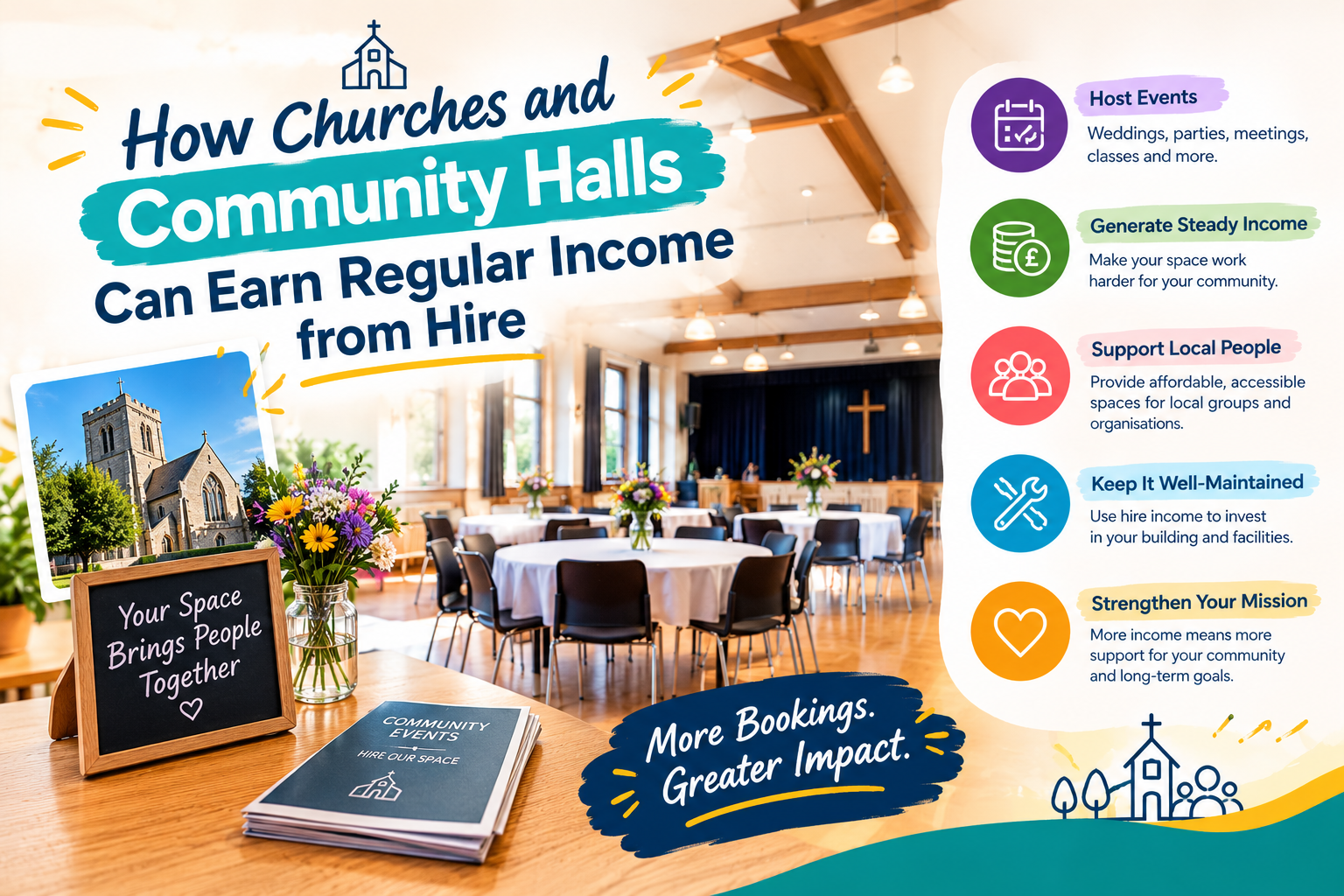
Churches and community halls are often at the heart of their local areas. They provide space for meetings, classes, celebrations, support groups and community activities. However, many halls are only used for a few hours each week, leaving rooms empty for much of the day. Hiring out these spaces can be a practical way to bring in regular income while making better use of the facilities.
For churches, charities and community organisations, hall hire income can help cover everyday running costs, maintenance, heating, electricity and improvements to the building. It can also provide extra funding for community projects and activities. With the right approach, a hall can become a useful source of income without losing its connection to the local community.
Why Hall Hire Can Be a Reliable Source of Income
Church hall income from hire can make a real difference to organisations that need to manage building costs. Even a small number of regular bookings can create a steady income over time. For example, a room hired every Tuesday for a weekly class or a main hall used by a local group every Thursday can provide more predictable income than relying only on occasional events.
Community hall fundraising through hire does not always need to involve large private functions. Regular bookings from groups such as fitness instructors, children's activity providers, language tutors, music teachers and local charities can help fill quieter periods. These bookings may also introduce new people to the building and strengthen its role in the neighbourhood.
The first step is to look at when the hall is available. Some venues are busy during evenings and weekends but remain empty during weekday mornings and afternoons. Others may have smaller rooms that are not used as often as the main hall. Identifying these gaps can help owners find opportunities to earn money from their hall.
To help understand the financial potential of empty slots, venue managers can use the Conveenie Idle Revenue Calculator. By entering basic details about available space, typical hourly rates, and opening hours, halls can estimate the extra income that increased utilisation could generate each year.
What Types of Groups Hire Church and Community Halls?
There are many types of local groups that need affordable and accessible spaces. Community halls are often suitable because they can offer flexible layouts, larger rooms and facilities that smaller commercial venues may not provide.
Children's activity providers may need a regular space for after-school clubs, holiday activities, dance lessons or weekend workshops. Fitness instructors and wellbeing professionals may look for a room for yoga, exercise classes, meditation or other group sessions. Local charities, voluntary organisations and support groups may also need a comfortable place to meet regularly.
Other potential hirers include language schools, tutoring providers, arts and crafts groups, music teachers, community organisations and local businesses running training sessions. Private individuals may also enquire about birthday parties, family celebrations and other gatherings.
Thinking about the different audiences in the area can help hall owners decide which types of bookings are most suitable. It is also worth considering whether the building has separate rooms that can be hired independently, as this may create more opportunities for bookings throughout the week.
How to Fill Quiet Weekday Slots in a Community Hall
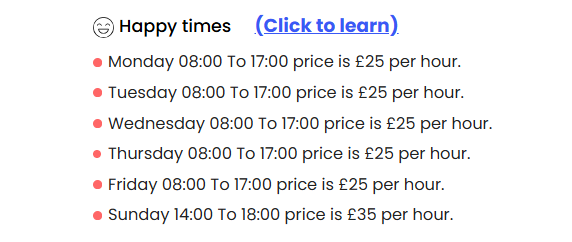
One of the easiest ways to increase hall hire income is to make better use of the hours when the building is usually empty. For inspiration on making the most of off-peak hours and creating memorable community events, see our guide on hosting happy times. Weekday mornings and afternoons can be attractive to groups that do not need evening or weekend access.
Start by creating a clear timetable of available rooms and times. If a main hall is used for church activities on Sundays and community events in the evenings, it may still be available for classes, meetings or workshops during the day. Smaller rooms could be offered to tutors, counsellors, support groups or local organisations looking for a regular meeting space.
Offering regular weekly bookings can be particularly useful. Instead of arranging a new hire for every session, a group may prefer to reserve the same room at the same time each week. This gives the hirer consistency and helps the venue build a more predictable income.
It is also important to make availability easy to understand. Clear information about room sizes, facilities, access arrangements, prices and available times can help potential hirers decide whether the space is suitable before making an enquiry.
Should a Church Hall Hire to Private Parties?
Private parties can be another source of income for church and community halls, but each organisation should decide which types of events fit its building, values and management arrangements.
Birthday celebrations, family gatherings, children's parties and anniversary events may be suitable for some halls. These bookings can help generate income during weekends and school holidays, when demand for event spaces may be higher. However, owners should consider noise levels, cleaning, security, insurance, access to kitchens and the time needed for setting up and clearing away.
Some halls may prefer to focus on community activities and regular group bookings rather than private celebrations. Others may be happy to accept a mixture of community and private hires. Having a clear hire policy can help avoid confusion and make expectations clear for everyone.
Before accepting a booking, owners should explain what is included in the hire, whether decorations or outside catering are allowed, how keys and access will be managed, and whether a deposit is required. It is also sensible to check any relevant insurance, safeguarding, licensing and building-use requirements for the planned activity.
How to Price a Church or Community Hall for Hire
Setting the right price is important when trying to increase hall bookings. A price that is too high may discourage local groups, while a price that is too low may make it difficult to cover the costs of running the building.
When deciding how much to charge, consider the size of the room, location, facilities, available equipment and the type of booking. A main hall with a kitchen, tables, chairs and accessible toilets may be priced differently from a small meeting room with basic facilities.
It can also be useful to have different rates for different types of hire. For example, a community group or charity may be offered a reduced rate, while a commercial organisation or private party may pay a standard rate. Regular hirers could also be offered a consistent weekly price, provided it still covers the costs involved.
Owners should calculate the cost of heating, electricity, cleaning, staffing, maintenance and administration before setting their rates. The aim is to create a fair price that supports the organisation while remaining attractive to potential hirers.
How to Market a Church Hall to Local Groups
Even a well-maintained hall can struggle to attract bookings if people do not know it is available. Marketing the space is therefore an important part of increasing venue owner income in the UK.
Start by taking clear photographs of the rooms from different angles. Show the seating arrangements, available facilities, entrances and any outdoor areas that hirers can use. A detailed description should explain the capacity, location, accessibility, kitchen facilities, equipment and types of activities permitted.
Local promotion can also help. Churches and community organisations can share availability through their websites, noticeboards, newsletters and social media pages. Building relationships with local schools, charities, activity providers and community groups may also lead to regular bookings.
Online venue directories and booking platforms can make the process easier by helping people discover spaces outside their immediate networks. Listing a hall online gives potential hirers a place to compare facilities, understand the hire arrangements and enquire about available dates.
For hall owners who want to reach more people, listing a space on a venue-hire platform can be a useful step. Conveenie helps connect venue owners with people and organisations looking for spaces to hire across London. We’ll even invest in a ‘scan to book’ large outdoor banner! 
Rather than relying only on word of mouth, a church or community hall can create an online listing that explains what the space offers. Owners can showcase photographs, describe the facilities, provide capacity information and make it easier for potential hirers to find out whether the venue suits their needs.
If you manage a church hall, community centre or meeting space, you can explore the Conveenie venue directory to see how different spaces are presented. You can also visit Conveenie to learn more about listing a venue and reaching people searching for event and community spaces.
A good listing should answer the questions that potential hirers are likely to ask. Include clear photographs, accurate prices, room capacities, available facilities, access information and the types of activities you accept. Keeping these details up to date can help reduce unnecessary enquiries and make it easier for suitable hirers to contact you.
Making Hall Hire Easier for Volunteers to Manage
Many church and community halls are managed by volunteers who already have other responsibilities. Taking on regular bookings can create extra work if the process is not organised properly.
A simple booking system can make a big difference. Keep a shared calendar showing when each room is available, record confirmed bookings and make sure the person responsible for the hall has the latest information. It is also useful to have a standard hire agreement covering payment, cancellations, deposits, cleaning, keys, access and the hirer's responsibilities.
For regular users, agree on a clear arrangement for payment and access. For one-off events, make sure there is enough time between bookings for cleaning and setting up the room. Having one main contact for enquiries can also help prevent messages from being missed.
The aim should be to create a manageable process that does not place too much pressure on volunteers. Clear procedures can help the organisation accept more bookings while keeping the building safe and well looked after.
A church or community hall does not need to be busy every day to generate useful income. A few regular weekday bookings, combined with suitable weekend events, can make better use of rooms that would otherwise remain empty.
The key is to understand what local groups need, set fair hire prices, provide clear information and make the space easy to discover. Whether you manage a church hall, a community centre or a smaller meeting room, regular venue hire can help support the building and the activities that take place there.
If you have a hall or community space that is not being used to its full potential, consider listing it on Conveenie. Visit Conveenie to explore how you can present your space to people looking for a venue to hire and start attracting more enquiries.