Event Timeline Templates Every Planner Should Use
Planning an event can involve many different things. You may need to find a venue, invite guests, arrange food, contact suppliers and prepare everything for the day.
With so many things to remember, it can be easy to forget something.
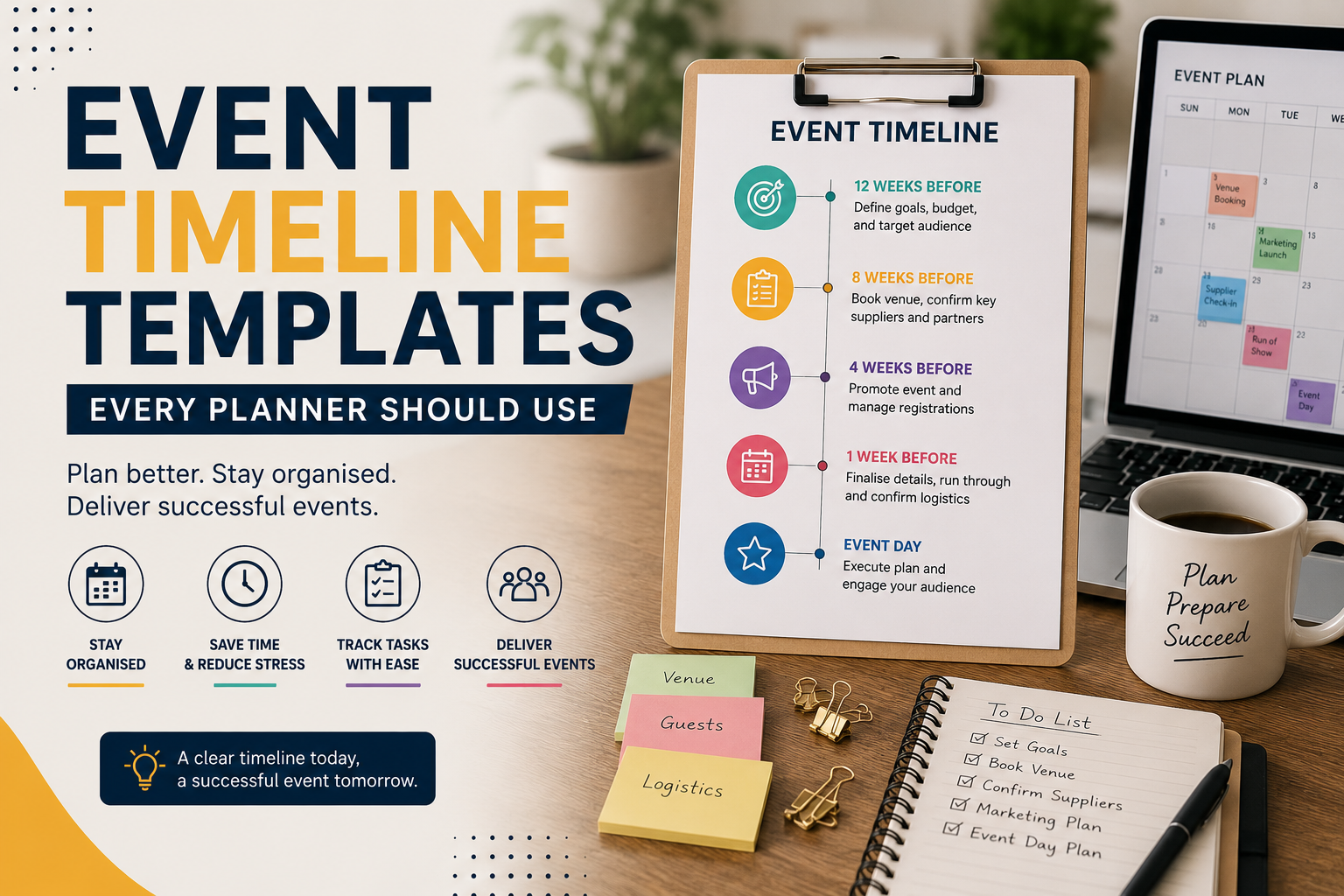
An event timeline is a simple way to keep everything organised. It shows what needs to be done and when you need to do it.
You do not need a complicated timeline. A simple list of tasks and dates can be enough.
1. Start With the Event Date
The first thing to add to your timeline is the date of the event.
Once you know the date, you can work backwards and decide when the other tasks need to be completed.
You can start with the main things, such as deciding your budget, guest numbers and finding a suitable venue for hire.
If you are not sure what type of space you need, it can help to read a guide to choosing the perfect space for your event before making a decision.
2. Three Months Before the Event
If you have around three months before your event, start with the bigger decisions.
Think about the type of event you are planning, how many people you expect and how much you want to spend.
This is also a good time to start looking for your venue. You can browse different event spaces on Conveenie and compare them based on location, size and facilities.
Booking the venue early can also give you more time to organise the other parts of your event.
3. Two Months Before
Once you have chosen your venue, you can start working on the next steps.
This could include sending invitations, contacting suppliers and planning food and activities.
If you are organising a meeting, workshop or business event, you may also want to check that the venue has the facilities you need, such as tables, chairs, Wi-Fi and presentation equipment.
You can also read about the different uses of community spaces if you are looking for ideas for your event.
4. One Month Before
By this stage, most of the main decisions should be made.
You can start confirming your guest numbers and checking arrangements with suppliers.
It is also a good time to look again at your venue hire booking. Check the date, time, number of guests and what is included.
If you are using Conveenie, you can also check the details of your booking and contact the host if you have any questions about the space. Conveenie allows guests to message hosts about specific requirements or arrange a visit before booking.
5. One Week Before
The final week is mainly about checking that everything is ready.
Go through your event timeline and tick off the things that have already been completed.
You can confirm the venue, suppliers, food and equipment. You can also prepare things such as signs, name tags, decorations and printed information.
Try to finish as much as possible before the event day so you are not rushing at the last minute.
6. On the Day
Your timeline should also include the actual event day.
For example:
- 9:00 am – Arrive at the venue
- 9:30 am – Set up tables and chairs
- 10:30 am – Guests arrive
- 11:00 am – Event starts
- 1:00 pm – Food or break
- 3:00 pm – Event finishes
- 3:30 pm – Clean up
Your timings will depend on your event, but having everything written down can help you stay organised.
If you have booked a space through Conveenie, make sure the time you have access to the venue is included in your timeline.
7. After the Event
Your timeline should not stop when the guests leave.
You may still need to clean the space, return equipment or check that nothing has been left behind.
If you have hired a venue through Conveenie, check the host's requirements before leaving. Some venues may have specific cleaning or closing arrangements.
It can also be useful to spend a few minutes thinking about what went well and what you would change next time.
Simple Event Timeline Template
Here is a simple timeline that you can use as a starting point:
| Time | Task |
|---|---|
| 3 months before | Decide the event, budget and venue |
| 2 months before | Send invitations and contact suppliers |
| 1 month before | Confirm main arrangements |
| 2 weeks before | Check guests, venue and equipment |
| 1 week before | Confirm final details |
| Day before | Prepare materials and decorations |
| Event day | Set up and run the event |
| After the event | Clean up and check the venue |
You can change this depending on the type and size of your event.
An event timeline does not need to be complicated.
A simple list of tasks and dates can help you remember what needs to be done and give you a better idea of how much time you have.
Start with the important things, such as your date, budget and venue booking, and then work through the smaller details.
The more you prepare before the event, the easier it can be to manage things on the day.
And if you are still looking for the right space, Conveenie makes it possible to search and compare different community spaces, meeting rooms and event venues in one place.
- Aug 21, 2026