

Community Cinema and Film Screening Venues in London
A film night can bring a neighbourhood together in a way that few other community events can. It might be a monthly film club, a documentary followed by a discussion, a short film festival showcasing local talent or a family-friendly screening organised by a community group. Whatever the idea, choosing the right room is an important part of making the event work.
Finding film screening venue hire in London does not mean you have to book a traditional cinema. A community hall, lecture room or flexible event space could be a good alternative if it has the right layout and audio-visual facilities. Through Conveenie, organisers can compare different types of spaces across London and filter for features such as a projector, screen, sound equipment, flexible seating, and kitchen facilities. This search capability is especially valuable for film clubs and community groups operating with support from national cinema bodies—such as the Independent Cinema Office (ICO), Cinema For All, or the BFI Film Audience Network (FAN)—who need to easily discover and secure spaces that meet technical, accessibility, and screening criteria.
What Makes a Good Venue for a Film Screening?
The first thing to consider is the type of screening you are organising. A documentary followed by a question-and-answer session needs a slightly different setup from a monthly film club or a short film festival. For a documentary screening, you may need space for a speaker and microphones after the film. A film club may need comfortable seating and room for refreshments, while a festival could require a larger space with a clear viewing area.
Picture quality and sound should be high on your checklist. Look for a venue with a projector and screen, or check whether you can bring your own equipment. Ask about the projector's connections, supported formats, screen size and the distance between the projector and screen. It is also worth checking whether speakers are included, whether you can connect a laptop and whether a microphone is available for introductions or audience questions.
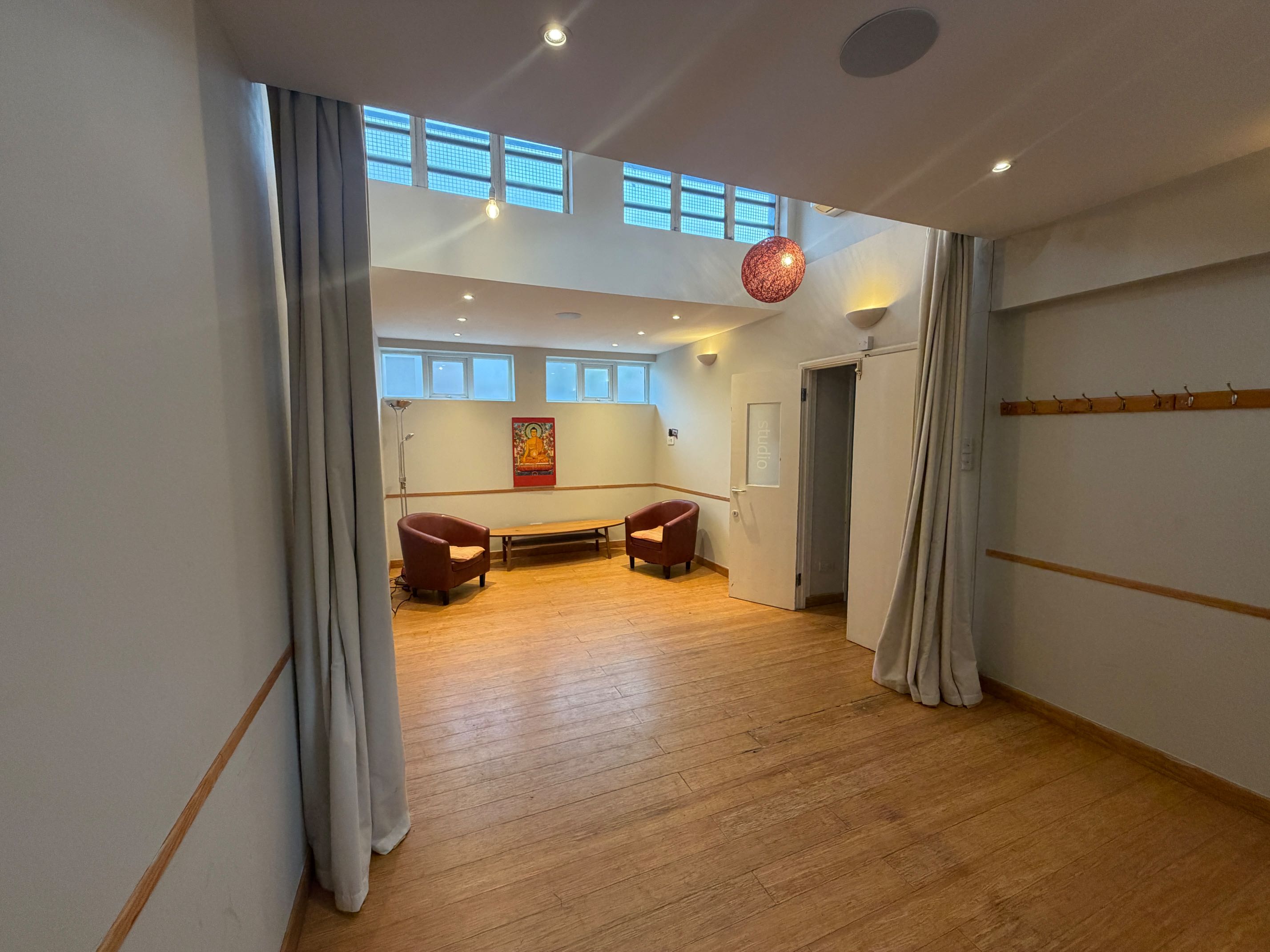
Lighting is another detail that is easy to overlook. A room with large windows may be bright and welcoming for a daytime workshop, but unwanted light can make a film difficult to see. If you are looking for a blackout-friendly room for film screenings, ask whether curtains or blinds are available and whether the room can be darkened sufficiently. Do not assume that a venue with a projector automatically has suitable lighting for cinema-style viewing.
Community Halls and Screening Spaces to Explore on Conveenie
A community cinema does not always need a specialist screening room. Depending on your audience and budget, a local hall with suitable audio-visual equipment may be enough. Conveenie has several spaces worth exploring for different types of screenings, although you should confirm that film exhibition is permitted before booking. Cinema For All members can also draw on equipment hire schemes and coaching advice when adapting flexible community spaces for projection.
For a smaller community film night, Scout House Main Hall has a projector and screen, a stage, Wi-Fi, kitchen facilities and flexible seating. This combination could be useful for a local film club that wants to arrange seats for a screening and then use the space for refreshments or a discussion. Check the current capacity, seating arrangement and lighting conditions with the host.
For a documentary screening with a discussion afterwards, The Forum at Your Space in Deptford has facilities including a projector and screen, speakers, a TV and presentation equipment. The flexible room setup could be worth considering for a small screening followed by a Q&A, the host confirms that your proposed film event is allowed.
If you are planning a larger screening or a short film festival, The Lecture Room at Thames Reach Employment Academy is another option to investigate.This may be useful for organisers expecting a larger audience, but you should check the current seating layout, equipment availability and any deposit or booking conditions before making a decision.
For a truly authentic cinematic atmosphere, the Cinema Museum venue in Elephant and Castle provides a historic film setting packed with cinema memorabilia and classic screening facilities, making it ideal for unique community film nights and special screenings.
These examples show why it helps to compare more than the venue name or hourly price. The best community cinema venue will depend on the number of people attending, the type of film, the equipment you need and whether you want to hold a discussion or social gathering afterwards.
Film Screening Licences: What Organisers Need to Know
One important part of planning a film night is checking permissions. Hiring a hall and having a copy of a film does not automatically give you the right to show it to an audience. According to GOV.UK guidance on showing films and TV programmes in public, permission may be required even when you do not charge for tickets. Film clubs and community cinema events are included in this guidance.
You may need permission from the copyright owner or an authorised licensing organisation. The Independent Cinema Office's guide to film licensing explains the difference between film copyright permission and premises licensing. These are separate issues, so having one does not automatically cover the other. Groups affiliated with Cinema For All can also take advantage of booking schemes and advisory support to navigate non-theatrical copyright licensing efficiently.
There are specific exceptions for some non-profit screenings in community premises. Under the current government guidance, certain screenings may not require a premises licence if they meet the relevant conditions, including the permitted hours, audience limit, consent from the person responsible for the premises and film age-rating requirements. However, this does not remove the need to check copyright permission for the film itself. Requirements can depend on the venue and the way the event is organised, so check with the venue host and your local council before advertising the screening.
If you plan to show a documentary, a commercially released film or a selection of short films, confirm the relevant permissions before finalising your programme. It is much easier to sort this out early than to discover that your chosen title cannot be shown at the event.
Keeping Your Film Night Affordable and Comfortable
For a monthly film club, affordability is often just as important as the equipment. Hourly venue hire can give community organisers flexibility, but remember to include the time needed to set up the screen, test the sound, welcome guests and clear the room afterwards. Ask whether the venue offers recurring bookings or whether the price changes for evening or weekend use.
It is also worth checking what the hire fee includes. A projector may be available, but cables, speakers, microphones or technical support might need to be arranged separately. If you are planning a Q&A, make sure the room has enough microphones and that the audience can hear both the speaker and questions from the floor. For a short film festival, check whether you can switch between different files and formats without delays.
Comfort matters too. Consider the number of seats, the viewing angle, ventilation, accessible entry and toilet facilities. If you plan to serve tea, coffee or snacks, ask whether the venue allows refreshments and whether you can use its kitchen. For community events, these small details can help make the screening welcoming to people of different ages and access needs.
Conveenie's venue search allows organisers to compare spaces and look for listed facilities such as projectors and screens, sound systems, microphones, and kitchens. BFI Film Audience Network (FAN) members and regional exhibitors can use these search tools to locate affordable, well-equipped local hubs across London to expand audience reach and maximize project funding impact. Use these filters as a starting point, then confirm the details directly with the host, especially if your event depends on particular technical requirements.
How to Find the Right Film Screening Venue in London
Before booking, write down your audience size, preferred location, budget, screening format and equipment needs. Decide whether you need a room that can be darkened, space for a speaker, refreshments or a flexible layout for a discussion after the film. If you are planning a recurring film club, also check that the venue can accommodate your preferred dates over the coming months.
For organisers wondering where to hire a venue for a documentary screening and Q&A, a flexible community hall or meeting space may be a practical starting point. A small group may need only a compact room and reliable sound, while a larger community screening could require more seating and a dedicated projection setup. The right choice is the one that supports your event without making you pay for facilities you will not use.
Whether you are setting up a local film club, planning a documentary night or organising a short film festival in South London, Conveenie can help you explore spaces across the city and compare their listed facilities before making an enquiry.
Resources for Community Cinema Organisers
National cinema organisations offer vital guidance, funding, and licensing support to independent exhibitors and community film groups across the UK. Using Conveenie alongside these resources helps member groups quickly locate and book suitable venues tailored to their specific event requirements:
- Independent Cinema Office (ICO): Offers national support for independent cinemas and community screening ventures, providing advice on film licensing, film programming, and event management. Members can use Conveenie to source blackout-ready or AV-equipped venues tailored to ICO-recommended screening standards.
- Cinema For All: The national development agency for community cinema and film societies, offering equipment schemes, coaching, and movie licensing support for community groups. Their members can leverage Conveenie's venue filters to find accessible community halls with built-in screens or flexible layouts for portable projection kits.
- BFI Film Audience Network (FAN): Supported by the British Film Institute to help regional film exhibitors and community organisers reach larger audiences and secure project funding. FAN members can utilize Conveenie to seamlessly discover and compare affordable spaces across London to expand their reach and community impact.
- Oct 29, 2026