How to Launch Your First Yoga Class: A Guide to Finding the Perfect Studio
Launching your first yoga class is a massive milestone. Whether you’ve just received your certification or you are transitioning from one-on-one sessions to group teaching, choosing the right venue is the decision that makes everything else fall into place.
The space you teach in does more than just hold the people; it sets the tone for your class, influences student retention, and shapes how confident you feel standing at the front of the room.
This guide will walk you through exactly how to launch your first yoga class at a rented studio, from finding the right venue to confidently stepping onto the mat for your first session.
Why the Right Studio Matters for Your First Class
Your first class is more than a slot on a timetable—it’s the first impression of your personal brand. A chaotic or cold environment can distract students, while a well-chosen sanctuary helps you:
- Create a "Container": Establish a calm, welcoming atmosphere immediately.
- Build Retention: Students return to spaces where they feel safe and comfortable.
- Teach Safely: Proper flooring and spacing prevent injuries.
- Boost Confidence: It is much easier to find your voice as a new instructor in a professional space.
Finding a studio that aligns with your teaching style is the crucial first step.
How to Find a Yoga Studio to Teach Your First Class
1. Use a Dedicated Venue Platform
In the past, teachers had to walk around town noting down numbers or cold-calling gyms. Today, platforms like Conveenie streamline this process.
- Search Efficiently: Find studio rental options specific to your local area.
- Compare Instantly: See prices, square footage, and amenities side-by-side.
- Book Flexibly: Rent by the hour without signing scary, long-term commercial leases.
This is the smartest way to test the waters without a heavy financial commitment.
2. Look Beyond Traditional "Yoga Studios"
Some of the most atmospheric spaces aren't labeled as yoga studios. Broadening your search can uncover hidden gems that are often more affordable:
- Wellness Centres: Often have great vibes and existing foot traffic.
- Community Halls: Perfect for building a local, accessible following.
- Dance Studios: Usually have excellent flooring and mirrors (great for alignment-focused classes).
- Creative Spaces: Art galleries or lofts can offer a unique, memorable aesthetic.
How to Choose the Perfect Studio: A Checklist
When you go to view a potential space, keep this checklist in mind to ensure it fits your needs.
Space & Layout
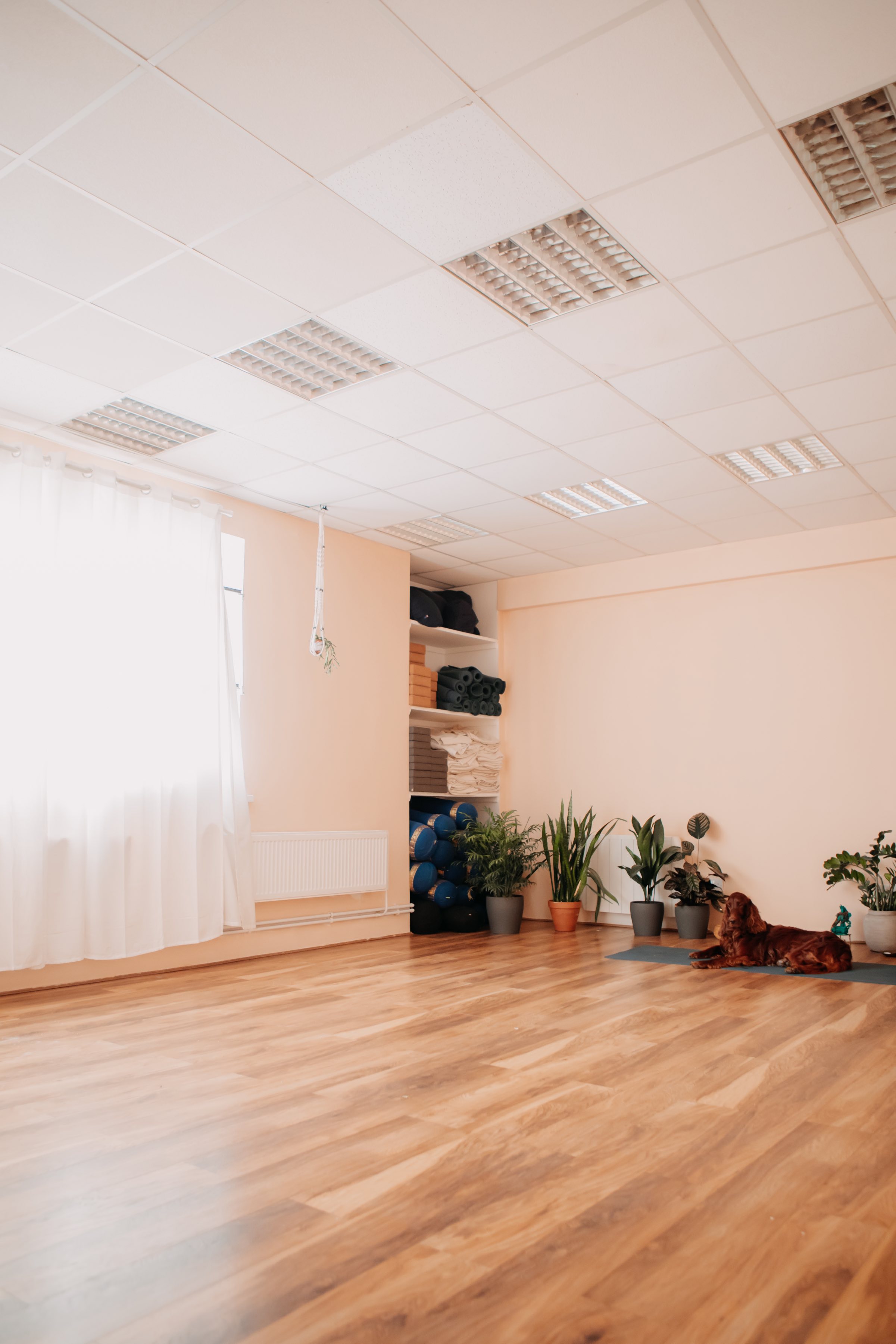
Does the studio comfortably fit your expected class size? Remember, you need room for:
- Student mats (with space between them).
- Your demo mat at the front.
- Walking space for you to offer adjustments safely.
Atmosphere & Sensory Details
For your first class, avoid overly clinical or noisy environments.
- Lighting: Are there windows? Can you dim the lights for Savasana?
- Sound: Is it soundproofed from street noise or heavy foot traffic?
- Temperature: Can you control the heating? (Crucial for Vinyasa vs. Yin).
Location & Accessibility
If it’s hard to find, students might arrive stressed or late. Choose a studio that is:
- Easy to reach by public transport or has parking nearby.
- Clearly signposted from the street.
- Safe and well-lit, especially if you are teaching evening classes.
How to Keep Costs Low When You Start
Launching your first class doesn’t require a massive budget. In fact, keeping overheads low alleviates the pressure to fill every mat immediately.
- Book Off-Peak ‘Happy Times’: Weekday mid-mornings or mid-afternoons are often significantly cheaper than the 6 PM prime-time slot.
- Start Small: Commit to a 6-week block or a weekly drop-in rather than renting a space full-time. Plenty of venues offer discounts for recurring bookings (minimum of 3), so it’s well worth taking advantage of this.
- Pay-As-You-Go: Use platforms like Conveenie to book only the hours you need.
- Check What’s Included: A slightly more expensive room might actually be cheaper if it includes mats, blocks, and bolsters that you would otherwise have to buy yourself.
Step-by-Step: From Booking to Teaching
Step 1: Define Your Offering
Be specific. "Yoga for Everyone" is often too broad.
- Style: Hatha, Vinyasa, Yin, or Beginner Basics?
- Duration: 60 minutes is standard, but 75 minutes allows for a longer meditation.
- Who is it for? Stressed corporate workers? Post-natal mums? Total beginners?
Step 2: Secure Your Space
Use Conveenie to secure a studio hire that fits your budget and vibe. Look for a space that allows you a 15-minute buffer before and after class for setup.
Step 3: Spread the Word
You have the space; now you need the students.
- Social Media: Share behind-the-scenes videos of the beautiful studio space you’ve rented.
- Local Community: Post on local Facebook groups and Nextdoor.
- Word of Mouth: Offer a "Bring a Friend for Free" deal for the first session.
Step 4: The "Day Of" Ritual
- Arrive Early: Get there 20–30 minutes before start time.
- Set the Mood: Adjust the lights, set up your playlist, and burn some palo santo (if allowed).
- Greet Personally: Ask students about injuries and learn their names.
Final Thoughts: Start Small, Teach with Confidence
Launching your first yoga class doesn’t require a perfect studio or a packed room—it requires the right space, consistency, and a belief in your teaching. By choosing a flexible studio hire, you give yourself and your students the foundation to grow together.
Conveenie makes it easy to find, compare, and book yoga studios for classes, so you can stop worrying about logistics and focus on what matters most: sharing your practice
- Jan 13, 2026